
Blog OleProf
Varieties of terrace boards: advantages, disadvantages, care and cleaning tips. Terrace decor ideas, design trends and color solutions for a cozy atmosphere. Projects with your own hands, comparison with alternative materials and their advantages.
What is WPC and how is it used in construction?
WPC is the material of choice for projects requiring a wood-like finish without the complex maintenance associated with natural wood. It is suitable for decks, facades, fences, balconies, pool areas, outdoor café spaces, and private yards throughout Ukraine.
What is WPC?
WPC, or wood-polymer composite, is a material made from wood chips, a polymer matrix, and additives, which is molded into shaped products for construction and finishing. In appearance, it resembles wood, but in terms of performance, it is more similar to an engineering composite.
The material is based on particles of ground wood. Wood flour derived from woodworking industry waste is most commonly used. The polymer component binds the filler, reduces moisture absorption, and helps the profile maintain its shape.
WPC is not a substitute for concrete, metal, or structural timber in load-bearing structures. It is used for decking, cladding, decorative fencing, screens, and facade or deck systems. Load-bearing building elements require materials that have been calculated by a designer in accordance with load standards.
Composition of the wood-polymer composite
The composition of wood-polymer composites includes wood flour, thermoplastic polymers, and chemical modifiers, which determine the composite’s strength, color, stability, and processing properties. The exact formulation depends on the manufacturer and the intended use of the product.
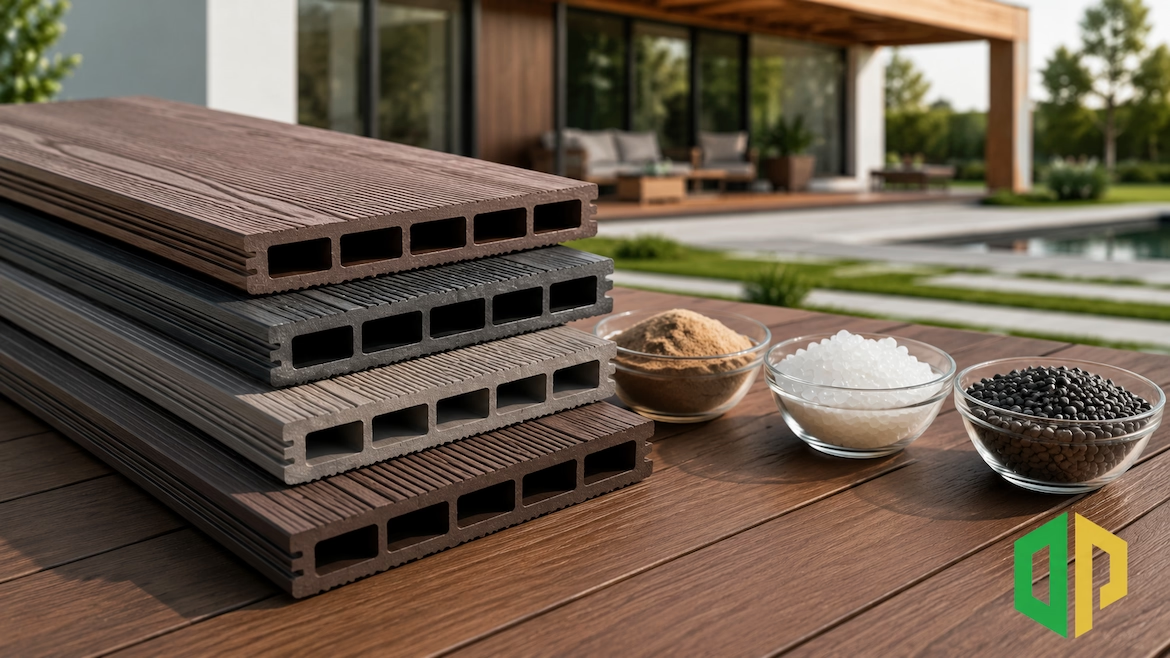
The polymer component may consist of organic or synthetic polymers, such as polystyrene, polyethylene, polypropylene, and polyvinyl chloride. For decking boards, wear resistance and moisture resistance are key. For siding boards, dimensional stability, fade resistance, and precise geometry are more important.
Modifiers improve the molecular interaction between the wood filler and the polymer. They help reduce cracking, enhance the adhesion of the components, stabilize the color, and make the surface less susceptible to environmental factors.
How WPC production works
WPC production is most commonly based on extrusion, a process in which a heated mixture of wood flour, polymer, and additives is forced through a forming die. The result is a profile in the desired shape: a board, slat, picket fence, or siding board.
After extrusion, the profile is cooled, calibrated, and cut to length. The surface can be sanded, brushed, textured, or smooth. This is important for construction companies and designers: different textures behave differently on open areas, steps, facades, and balconies.
What are the advantages of WPC?
The main advantage of composite decking is that it combines the aesthetic appeal of wood with resistance to moisture, rot, mold, and biological damage. For a private home, a waterfront café, or an open terrace, this reduces the cost of regular maintenance.
Unlike natural wood, this material does not need to be painted or treated with protective oils every year. It is resistant to insects, does not support mold growth when installed properly, and is easier to clean of everyday dirt.
In Ukraine’s climate, stability during seasonal changes is crucial. DPC withstands precipitation, solar radiation, and temperature fluctuations when installed with expansion joints. This is particularly important for terraces, open balconies, piers, entryways, and poolside areas.
The Use of WPC in Construction
The use of WPC in construction is justified in areas where finishes are constantly exposed to moisture, sunlight, dirt, and heavy foot traffic. The material is suitable for residential, commercial, and public spaces where appearance and ease of maintenance are important.
Decking for homes, cafes, and pools
WPC decking is used for flooring on terraces, porches, patios, balconies, and around swimming pools and on restaurant patios. It creates a smooth surface, requires no complicated seasonal maintenance, and complements modern architecture well.
Color is an important consideration for a private home. Decking boards available in multiple shades allow you to coordinate the flooring with the facade, roof, windows, and garden furniture. In projects for cafes and water parks, additional factors such as foot traffic, surface type, and ease of cleaning are taken into account
Building facade cladding
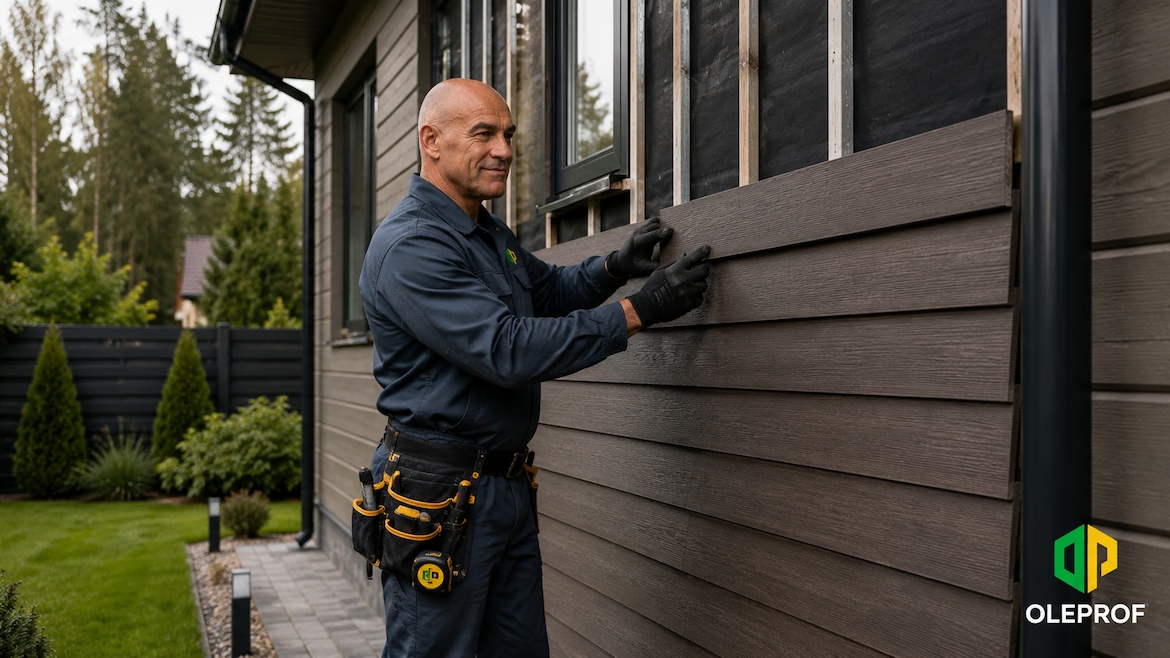
Siding is used to clad buildings when a neat facade with a wood-grain texture and high weather resistance is desired. WPC siding is suitable for private homes, commercial pavilions, recreational areas, and architectural accents.
This type of facade must be installed according to the manufacturer’s instructions. It is important to leave a ventilation gap, select the correct fasteners, and account for the profile’s linear expansion. This ensures that the cladding lasts longer and retains its shape.
Picket fence
WPC picket fencing is used for fences, gates, decorative screens, and property boundaries. It looks neater than many temporary solutions and does not require regular painting, making it ideal for country homes and HoReCa establishments.
If you're looking for a modern picket fence, you should decide in advance on the height, spacing between the slats, color, and type of frame. The metal frame provides strength, while the WPC pickets define the fence's appearance and ensure privacy.
Wood-polymer composite for interior use
Wood-polymer composite for interior use is ideal for areas with high humidity or where a durable finish is required: on balconies, in entryways, in sunrooms, in pool shower areas, and in commercial spaces. While this material isn’t suitable for every interior, it works well in high-traffic areas.
For interior projects, it is important to check the intended use, surface type, and the manufacturer’s recommendations. Not every outdoor profile is suitable for indoor use, and some interior design challenges are better addressed with tile, natural wood, or other types of panels.
Differences between WPC and particleboard, chipboard, or MDF
The difference between WPC and fiberboard, particleboard, or MDF is that DPK is a wood-polymer profile designed for damp and outdoor environments, whereas panel materials are more commonly used for furniture, rough construction, and dry indoor spaces. They should be compared based on their intended use, not just their appearance.
|
Material |
Basis |
Typical applications |
Behavior in a humid environment |
|---|---|---|---|
|
WPC |
Wood flour and polymer |
Terraces, facades, railings |
Good moisture resistance when installed correctly |
|
Fiberboard |
Wood fibers |
Back panels of furniture, backing |
Requires protection from moisture |
|
Particleboard |
Wood shavings and the binder |
Cabinetry, partitions |
It may swell if left unprotected |
|
MDF |
Fine wood particles |
Furniture fronts, panels, doors |
Sensitive to prolonged exposure to moisture |
Plywood is not a substitute for panel materials in furniture manufacturing, but it outperforms them when used outdoors. Fiberboard, particleboard, and MDF are best suited for applications where there is no direct exposure to precipitation or fluctuations in humidity.
How to Choose a WPC for Your Project
When selecting composite decking, you should consider the intended application, load capacity, profile type, color, fasteners, and the manufacturer’s documentation. Errors in selection often do not become apparent immediately, but only after a season of use.
For terraces, the key factors are thickness, working width, surface type, and installation method. For facades, the critical factors are ventilation, color stability, fasteners, and compatibility with the subsystem. For fencing, you need to consider the section height, wind load, support spacing, and frame material.
It is recommended to use material from a single batch
You should evaluate the color using actual samples, not just photos. Outdoors, the shade can vary depending on the lighting. For large projects, it’s best to use material from a single batch to minimize the risk of noticeable color variations.
When a WPC is particularly advantageous
WPC is particularly advantageous in situations where natural wood quickly requires repair, painting, or replacement. This often includes:
- open decks
- wet areas
- façade accents
- fences
- balconies
- commercial spaces with constant foot traffic.
For homeowners, this material means fewer seasonal concerns. For restaurants or water parks, it offers predictable performance and a neat appearance. For architects and landscape designers, it is a reliable material with straightforward geometry, a consistent color palette, and a wide range of applications.
If you’re planning to build a deck, facade, or fence using WPC in Ukraine, choose the right profile for your specific project. Request samples and clarify the installation requirements. Contact an Oleprof representative to select WPC decking, siding, or fencing for your project.
About us
OleProf - this is a company that provides a full range of services for the terrace: selection, delivery, installation, inspection.
Modern home decor
Oleprof.com ©2026 All rights reserved